Sexton advocates abolishing NASA in the CNN debate
Deception PointSexton advocates abolishing NASA in the CNN debate when Marjorie Tench forces him to choose between continuing the agency’s funding and ending the U.S. space program. His categorical answer makes NASA more than a budget issue: it binds his campaign to a public position that Herney’s later announcement of a claimed discovery of extraterrestrial life can sharply reverse against him.
Campaign Stakes and the Opening
Sexton had made NASA a central target in his attack on Herney’s spending. The agency’s failed missions and enormous budget overruns gave the senator a vivid example for his broader argument against big government. Gabrielle Ashe had helped turn that argument into a campaign strategy: when Sexton was trailing in the primary polls, she urged him to make NASA’s expense and continued White House bailouts a political issue. His assault on an institution associated with national pride was an unusual electoral gamble, but he believed the issue could expose Herney’s fiscal record.
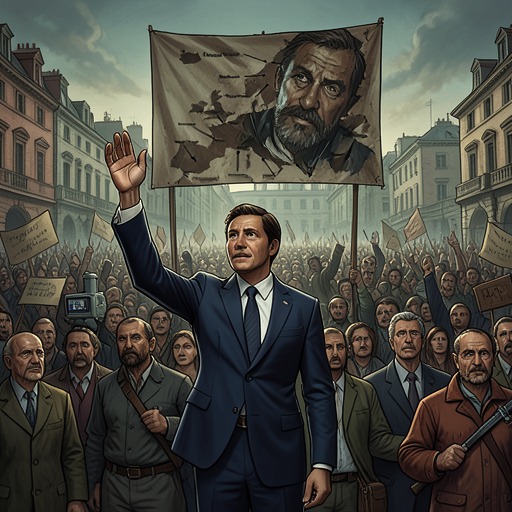
The subject surfaced during Sexton’s televised exchange with Tench after she had challenged his anti-abortion platform and raised the question of how he would fund educational improvements without higher taxes. Sexton took her reference to his attacks on NASA as an opening. He asked whether she had heard rumors of another failure at the agency, hoping to return attention to its record and costs. Tench denied hearing the rumor. The exchange then shifted from speculation about a particular setback to the larger question Sexton could no longer answer indirectly.
Tench Forces a Choice
Tench asked whether Sexton would abolish the space agency if she could show that space exploration could not be conducted for less than NASA was then spending. The question was designed to make him choose a side rather than shelter behind generalities about better management. Sexton first tried to say that NASA could explore space more cheaply under proper management, but Tench pressed him to decide between maintaining its current funding and scrapping the national space program altogether.
Tench framed the stakes as a matter of risk as well as cost. Space exploration, she argued, was dangerous and expensive, like building a passenger jet: the country should either do it properly or not at all. Faced with that formulation, Sexton accepted the forced choice. He said he would transfer NASA’s current budget directly to the school system and choose children over space. His answer went beyond criticizing waste or promising reform; it made abolition an explicit option he would take as president.
Tench immediately tested the consequence of that commitment, asking whether he would do away with the agency that had put men on the moon. Sexton objected to the implication but did not retreat from the substance. He declared the space race over, argued that NASA no longer played a critical role in ordinary Americans’ lives, and said taxpayers should not keep funding it as though it did. When Tench asked whether he believed space had no future, he distinguished the future of space exploration from NASA’s claim to lead it: he called the agency a dinosaur and urged the private sector to explore space instead.
From NASA to the Search for Life
Sexton’s argument widened from NASA’s budget to its scientific credibility. He portrayed the agency’s spending on the Search for Extraterrestrial Intelligence as a costly, fruitless hunt: satellite-dish arrays, large transceivers, and scientists listening to empty recordings. He cited forty-five million dollars spent over thirty-five years without a result and argued that another government agency would have been eliminated for such a record. His claim that extraterrestrial life would not be found converted uncertainty into a confident campaign judgment.
Tench asked what Sexton would say if he were wrong. He answered with a boast that he would eat his hat, treating the possibility as remote rather than engaging with its consequences. Tench replied that she would remember the statement. Her calm response turned his flourish into a promise that could be recalled at the precise moment his position became politically vulnerable.
The Trap Closes
The debate was not merely an argument over public spending. Herney, watching from the Oval Office, had arranged the exchange so Sexton would be drawn into a clear and memorable position. Tench’s question transformed Sexton’s familiar criticism of NASA into an on-record commitment to end its funding if the alternative were to preserve the space program at its current cost. The president turned off the television and poured himself a drink after Sexton had taken the bait.
The trap depended on a collision between political framing and changing circumstances. Sexton had cast NASA as an expensive failure and the search for extraterrestrial life as an embarrassing waste; the White House could later present a claimed discovery as a triumph for the very institution he had promised to abolish. Herney was also wary that opponents might label the discovery a political fraud, so he spoke of political opponents without naming Sexton. That caution underlined how readily the scientific announcement could be pulled into a campaign dispute.
Political Aftermath and Significance
When NASA’s discovery was announced, television analysts described the effect on Sexton’s campaign as a one-two punch. The news would have benefited Herney even if Sexton had held no particular position on NASA, but his debate answer gave the announcement a direct political contrast: Herney could stand beside the agency’s claimed achievement while Sexton was associated with abolishing it. The analysts said the senator’s campaign had fallen back to earth and judged that he would not recover from the combination of the discovery and his own recorded commitment.
The debate thus becomes a hinge between the campaign’s earlier attack on NASA and the new public meaning assigned to the agency. Sexton’s case had relied on framing NASA as wasteful, outdated, and unable to deliver results. Tench’s question forced him to state the endpoint of that case in plain terms; the later announcement made that clarity costly. His hat-eating boast sharpened the reversal, while the Oval Office scene reveals that the confrontation had been politically anticipated rather than accidental. The episode shows how a forced choice can turn a candidate’s preferred issue into a liability when events change the terms of public debate.